November 28, 2025
15 min
Cooling towers are essential for industrial cooling, but they are also heavy water users.
The challenge is simple - every degree of heat removed comes at the cost of evaporation, blowdown, and drift. Left unchecked, this adds up to thousands of gallons wasted daily.
The solution is not complicated.
By applying proven strategies like optimizing cycles of concentration (CoC), tightening blowdown control, and upgrading filtration, industries can achieve real water saving in cooling towers.
The goal is straightforward, and that is to cut water use, lower operating costs, and improve overall cooling tower water efficiency without compromising performance.
This blog will explain what water-saving really means, why towers consume so much water, and the smartest ways to boost cooling tower water efficiency.
✔ You can't improve what you don't track. Install meters and test your current COC.
✔ Fixing leaks and optimizing blowdown can save 15-30% water.
✔ Increasing from 3 to 6 cycles reduces makeup water by 20% and blowdown by 50%.
✔ Non-chemical treatment and other smart water systems deliver 50% to 80% savings with 12-24 month paybacks.
✔ Every gallon saved reduces both water bills and environmental impact.
✔ Start small and scale up.
Water saving in cooling towers means using less make-up water while keeping the system efficient, safe, and compliant.
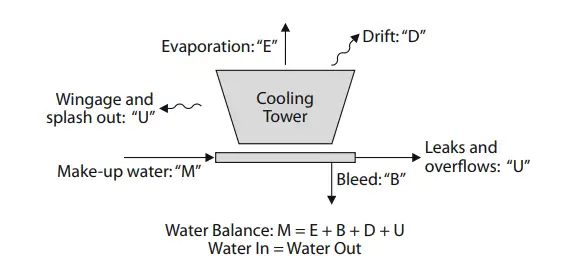
Every cooling tower loses water in four ways:
1. Evaporation (the natural process of cooling)
2. Blowdown (water discharged to control scale and salts)
3. Drift (tiny droplets carried away in exhaust air)
4. Leaks & overflows (avoidable losses from poor maintenance)
The three ways to save water:
| Method | What it does | Savings |
| Reduce evaporation | Use hybrid systems or covers to minimize water lost to air. | 10-20% |
| Optimize blowdown | Recycle water more times before draining. | 30-50% |
| Fix waste | Stop leaks, drift, and overflow. | 5-15% |
When we talk about cooling tower water efficiency, we're measuring how many times you can reuse the same water. This is called "cycles of concentration" (COC).
SOURCE - Best_Practice_Guideline/BPG_Cooling_Towers.pdf
Let's break down where your water actually goes and why cooling towers are such heavy users.
1. Evaporation
Evaporation is the primary function of your cooling tower; it's how heat gets transferred from the system to the environment.
Hot water from your facility enters the tower, gets sprayed over the fill material, and air blows through it. As water evaporates, it carries heat away.
On a hot day, a 500-ton cooling tower can evaporate 15 gallons per minute. That's 21,600 gallons in a 24-hour period!
2. Blowdown
As water evaporates, it leaves minerals behind (calcium, magnesium, silica). Over time, these minerals concentrate and can form scale or corrosion.
To prevent scale formation, a portion of the highly concentrated water must be removed (blowdown) and replaced with fresh makeup water.
The dissolved solids concentration is managed by monitoring cycles of concentration.
This is where you have the most control. By optimizing how often you drain water, you can reduce blowdown by 50% or more.
3. Drift
Drift is water carried away as mist or small droplets, controlled with baffles and drift eliminators.
While drift represents less than 1% of water use, older towers without modern drift eliminators can lose significantly more.
4. Leaks and Overflows
Properly operated towers should not have leaks or overflows. Yet many facilities lose 5-10% of water through:
- Float valves stuck open
- Basin overflows from incorrect water levels
- Distribution pipe leaks
-Pump seal failures
The Water Consumption Formula:
Makeup Water = Evaporation + Blowdown + Drift + Leaks.
1. Operating costs
Every extra gallon of makeup water increases bills for water, energy, and treatment chemicals. Optimizing cycles of concentration can reduce blowdown volumes by 20–50%, cutting costs significantly.
2. Regulatory compliance
Agencies like the EPA WaterSense program and DOE FEMP BMP #10 highlight tower efficiency as a best practice. Standards from ASHRAE also stress water management as part of Legionella risk prevention.
3.Sustainability & ESG
Many industries now report water use in their sustainability disclosures. Adopting strategies that save water in the cooling tower improves reputation and demonstrates a proper direction.
4.Risk Management
Overflow, drift, and untreated blowdown can damage equipment, increase interruptions, and create compliance issues.
The fastest way to achieve water saving in cooling towers is to optimize cycles of concentration, automate blowdown, and prevent leaks. Advanced options like side-stream filtration and water reuse can save even more.
Optimize Cycles of Concentration (CoC)
1. Raise CoC safely with proper monitoring.
2. Moving from 3 to 6 CoC can cut blowdown water by ~50% and reduce make-up demand by ~20%.
3. Use conductivity controllers to maintain the target CoC without over-discharging.
Automate Blowdown Control
- Install conductivity-based blowdown controllers.
- Prevent manual errors that waste thousands of gallons.
- Integrate with IoT monitoring for real-time data.
Fix Leaks & Prevent Overflows
1. Inspect sump tanks, valves, and piping regularly.
2. Install overflow alarms to catch unnoticed water losses.
3. Even small leaks can add up to millions of gallons annually.
Upgrade Drift Eliminators
- Specify eliminators that achieve ≤0.005% drift loss.
- Regularly clean and replace damaged eliminators.
- Reduces both water loss and risk of Legionella spread.
Improve Housekeeping
1. Clean basins and strainers frequently.
2. Reduce solids loading to allow higher CoC.
3. Schedule seasonal inspections (especially before peak cooling season).
Add Side-Stream Filtration
1. Filters 5–10% of recirculating water to remove suspended solids.
2. Options include sand filters, multimedia filters, or centrifugal separators.
3. Enables higher CoC and reduces scaling/fouling risks.
Reuse Alternative Water Sources
- Consider RO reject water, treated greywater, or rainwater harvesting for make-up supply.
- Always ensure water quality treatment before reuse.
- Reduces dependency on fresh potable water sources.
Beyond basic tips, industries can save even more by investing in advanced technologies such as side-stream filtration, smart monitoring, and non-chemical treatment systems.
1. Smart Water Meters and IoT Sensors
Smart water meters, integrated with IoT (Internet of Things) sensors, provide real-time data on water usage.
These devices detect leaks, measure consumption patterns, and alert users to abnormalities.
2. Install Conductivity Controllers for Automatic Blowdown
A conductivity controller continuously measures conductivity and discharges water only when the set point is exceeded.
3. Install Flow Meters on Makeup and Blowdown Lines
Meters that measure water flow in gallons per minute (GPM) or gallons per day. Flow meters let you check the ratio of makeup flow to blowdown flow and verify that both ratios match target cycles of concentration.
If ratios don't match, it indicates leaks or unauthorized draw-off.
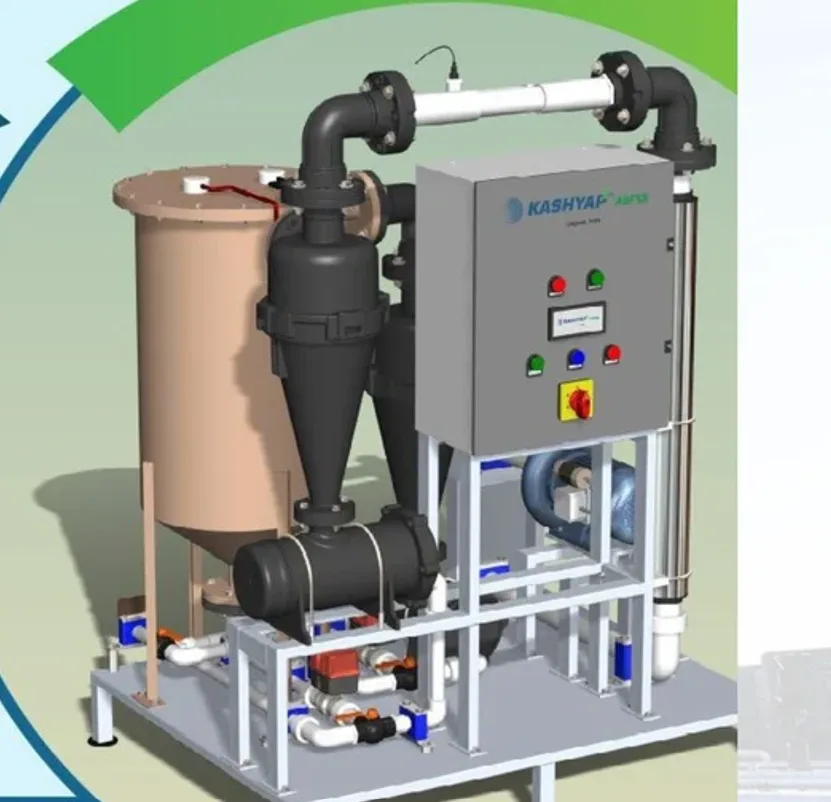
4. Install Kashyap Auto-Biofouling & Scale Removal System
(Auto-BFSR)
This revolutionary innovation uses electrolysis-based technology that tackles multiple cooling tower problems simultaneously without chemicals.
The Auto-BFSR System uses an advanced electrolysis process to prevent biofouling by stopping microorganisms from forming biological films while simultaneously removing scaling from piping systems.
Get in touch with us for more information↗
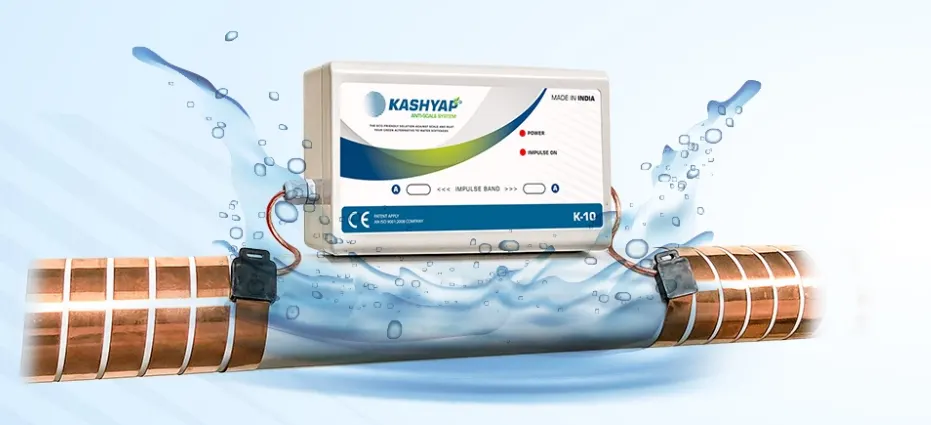
5. Install Kashyap Anti-Scale System
This innovation uses impulse technology that prevents scale formation and removes existing deposits, completely chemical-free.
The Kashyap Anti-Scale System is an electronic device that uses advanced microprocessor-controlled impulse technology to transform calcium crystals in water, preventing them from adhering to surfaces.
Contact us for more information↗
Major Cooling Tower Problems Solved by Kashyap Innovations
Both Kashyap systems directly address the most common cooling tower problems that plague industrial facilities:
Improving cooling tower water efficiency reduces operating costs, extends equipment life, and lowers environmental impact. The financial savings alone can justify the investment, while the sustainability gains strengthen ESG performance.
Practical cost benefits:
- Lower water bills: Less make-up water purchased = direct monthly savings.
- Reduced chemical costs: Higher cycles of concentration mean fewer chemicals needed for scale, corrosion, and biocide control.
- Energy efficiency: Clean heat-exchange surfaces cut pump and chiller energy use by 5–10%.
- Maintenance savings: Less scale and biofouling reduce any unplanned interruptions, cleaning labor, and equipment replacement.
- Extended asset life: Towers, chillers, and piping last longer when scaling and fouling are minimized.
Practical environmental benefits:
- Reduced discharge: Less blowdown water = lower wastewater treatment and discharge compliance risk.
- Lower freshwater demand: Conserves scarce municipal or groundwater resources, critical in water-stressed regions.
- Carbon footprint reduction: Using less water and chemicals also cuts the energy required for pumping, treatment, and transport.
- ESG & certifications: Supports green building standards, corporate ESG reporting, and compliance with local water-efficiency mandates.
Implementing these water-saving strategies in your cooling towers is essential for sustainable operations.
Excellent Water Technology specializes in designing and maintaining high-efficiency cooling tower solutions in the form of Kashyap's anti-scale and auto-biofouling scale removal system that maximizes water conservation without compromising cooling capacity. Our expert team helps industries achieve lower operating costs, extended equipment life, and environmental compliance.
Contact our team today for a customized water management assessment and start your journey toward sustainable, cost-effective cooling operations.
1. What is the best way to save water in cooling towers?
The best way to save water in cooling towers is to increase cycles of concentration (CoC) safely while controlling scale, corrosion, and biofouling.
2. How much water can a cooling tower save with non-chemical treatment?
With a properly designed non-chemical water treatment system, cooling towers can typically save 30–80% of blowdown water, depending on site conditions.
3. Why do cooling towers use so much water in the first place?
Cooling towers use large amounts of water because they rely on evaporation to reject heat. Additional losses occur through blowdown, drift, and leaks.
4. What are the latest technologies for cooling tower water conservation?
The latest technologies include side-stream filtration, smart IoT monitoring, non-chemical treatment systems, and water reuse solutions.
Your cooling tower doesn't have to be a water-wasting liability. With the right strategies, it becomes an efficiency showcase, saving money, meeting sustainability goals, and supporting regulatory compliance.
The solutions exist, and the ROI is proven. Choose your next step towards water saving today.

Get a Quote
Are you interested in our solutions?
Please feel free to contact me directly

Vivek Donga
CEO & Director (Technical)
Response within 24 hours
Mon-Fri 9:00 - 17:00