Why Chemical-Free Water Treatment is the Future

Vivek Donga

November 7, 2025

10 min

Introduction

Non-chemical water treatment systems are becoming increasingly essential for industrial and commercial sectors that seek to control pollution without relying on heavy chemical use.

A recent CPCB study highlights systemic flaws in India’s water treatment plants sludge mismanagement, inefficient filtration, and frequent lapses in disinfection, which compromise water quality across uses from drinking to irrigation.

At the same time, Punjab is in the spotlight after a 'Central Groundwater Board' report found that nearly one in three groundwater samples exceeded safe uranium limits due to industrial discharge, agricultural runoff, and inadequate oversight.

These developments make it clear that adopting non-chemical solutions is not only sustainable but also essential!

Key takeaways -

Chemical water treatment creates toxic sludge, high costs, and fails against pollutants like PFAS.

Non-chemical systems use physical and electronic methods, avoiding chemicals while improving water quality.

Industries achieve savings up to 50% on water, energy, and maintenance with chemical-free solutions.

Chemical-free systems reduce environmental risks, ensure compliance, and scale easily across industrial applications.

Excellent Water Technology’s patented solutions prevent scale, stop biofouling, and deliver long-term reliability.

The Problems with Traditional or Chemical-Based Water Treatment


ProblemExampleWhat went wrong
High chemical costs & interruptionMany Indian dyeing units in Ludhiana were told to adopt Zero Liquid Discharge or shut down because chemical treatment was costly and ineffective.Heavy reliance on chemicals means rising costs, frequent descaling, and system shutdowns.
Chemicals failing to remove new pollutantsStudies found PFAS (“forever chemicals”) in Chennai lakes and canals, even after treatment.Standard chemical treatments can’t tackle PFAS, microplastics, or modern contaminants.
Mixing of sewage and industrial wasteDelhi High Court flagged untreated industrial waste mixing with sewage, which weakened STP performance.When chemicals mix with complex industrial loads, treatment systems underperform, polluting rivers.
Fines for failing treatment plantsGovernment-run sewage plants in Himachal Pradesh were fined nearly ₹3 crore for polluting rivers.Poor design and chemical dosing lead to non-compliance, reputational loss, and heavy penalties.
Outdated regulationsIndia has only recently started national PFAS monitoring.Current standards miss modern pollutants, leaving gaps that harm ecosystems and human health.

What is Chemical-Free Water Treatment?

Chemical-free water treatment is exactly what it sounds like - cleaning and treating water without using any chemicals at all.

Instead of adding substances like chlorine, acids, or other harsh chemicals to your water system, these solutions use advanced technology to solve water problems naturally.

Think of it like this: traditional systems fight problems by adding more stuff to your water. Chemical-free systems solve problems by using smart technology like electronic frequencies, physical processes, or materials that work with nature instead of against it.

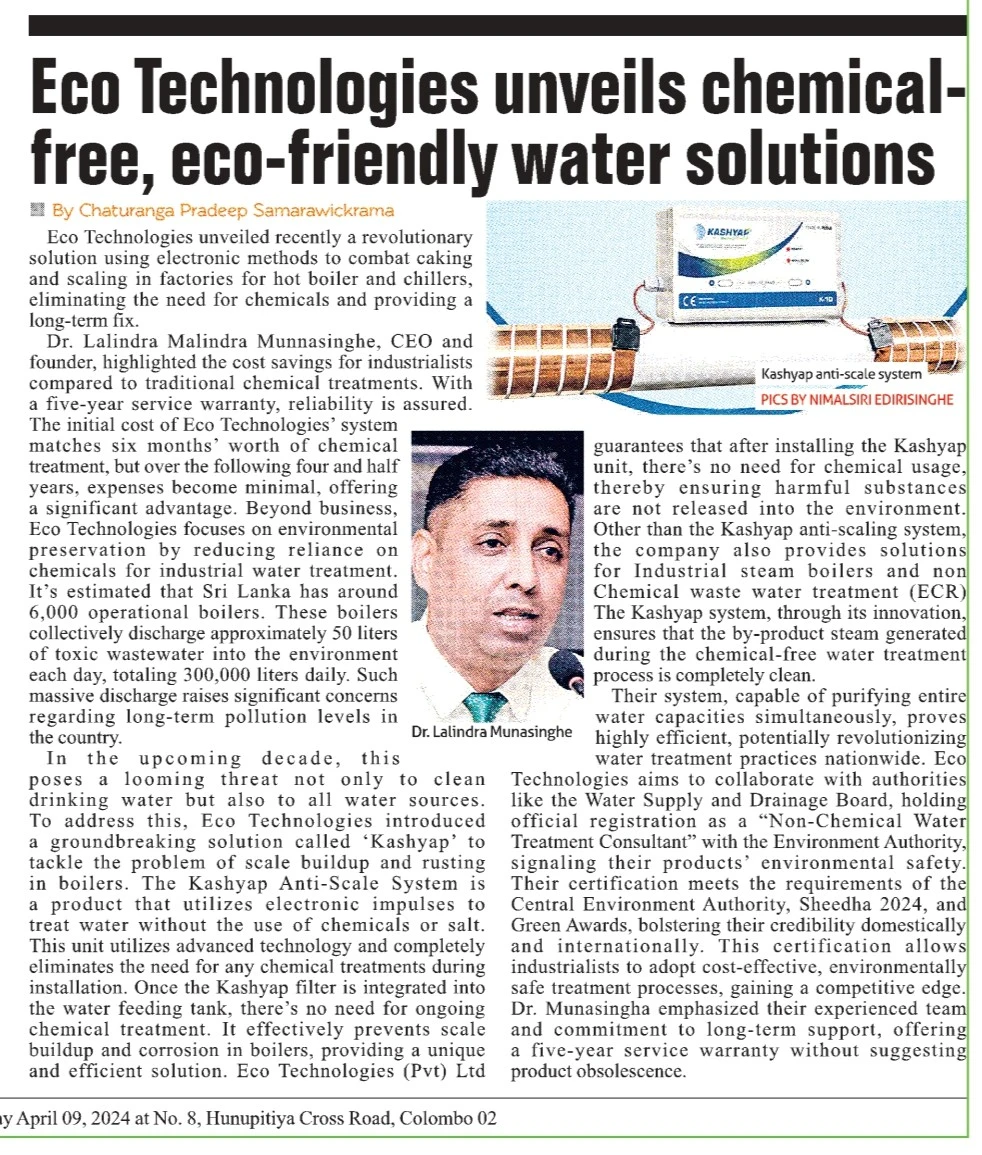
Dr. Lalindra Mallienda Maramsinghe, CEO and founder of Eco Technologies, explains that traditional chemical treatments create a cycle of dependency. Once you start using chemicals, stopping means facing the same problems all over again - often worse than before!

Their approach proves that choosing chemical-free over chemical water treatment is not just possible.. It's more effective long-term.

Why Choose Excellent Water Technology for Chemical-Free Water Treatment Solutions?

1. Cost Savings & Long-Term Reliability

Traditional methods require constant chemical dosing and frequent cleaning. This raises operational costs and interruptions. With chemical-free solutions, industries can cut expenses drastically.

Cooling towers using non-chemical treatment achieved greater savings on water and reduced chemical costs by half.

One data centre reduced cleaning cycles by 50%, saving both time and money.

This proves why industries should choose chemical-free over chemical water treatment to achieve better ROI.

2. Environmental Protection

Chemical residues often end up in sludge, rivers, or soil. By avoiding them, industries gain economic & environmental benefits:

At George Shannon Memorial Wetlands, advanced non-chemical treatment removed 95% of sediment and 50–80% of nitrogen/phosphorus, protecting ecosystems.

Using non-chemical filtration instead of chemicals in cooling towers saved 5–13% on energy bills during high-demand months.

3. Safer for Equipment

Scale and biofouling corrode pipes and reduce efficiency. Chemical-free systems prevent this without harsh reactions:

Industries relying on traditional systems spend heavily on descaling and downtime. In contrast, chemical-free technologies keep equipment running longer with minimal maintenance.

Our own Kashyap Anti-Scale System and Kashyap Auto Biofouling Scale Removal System directly address these challenges, offering continuous protection.

4. Regulatory & Sustainability Readiness

Regulations worldwide are tightening. PFAS and other “forever chemicals” highlight the weakness of chemical methods.

Adopting chemical-free treatment makes compliance easier while showing commitment to sustainability.

5. Zero Secondary Pollution

One of the biggest hidden problems with chemical treatment is the creation of toxic by-products. When chemicals are used to control scaling, corrosion, or biofouling, they don’t simply “disappear.”

Instead, they combine with contaminants in water and form sludge loaded with heavy metals, oxidised organics, and other hazardous compounds.

In fact, sludge management alone can account for 15–20% of an industry’s total water treatment costs. Worse, if not handled properly, it poses a serious risk of soil and groundwater contamination.

By contrast, chemical-free water treatment solutions operate without producing these dangerous residues.

They keep the water cycle cleaner, cut disposal expenses, and reduce the environmental liability industries face.

6. Scalability Across Applications

Another major advantage of chemical-free solutions is their ability to work across multiple industrial applications.

Whether it’s cooling towers in power plants, boilers in manufacturing units, heat exchangers in refineries, or even process water in textiles and pharma, non-chemical systems adapt smoothly.

Traditional chemical dosing systems need constant adjustment depending on water chemistry, flow rates, and system size.

If an industry expands production, chemical use (and cost) rises proportionally. This means higher budgets, more chemical handling, and greater operational complexity.

Chemical-free systems don’t face that limitation. They are designed to handle variable water conditions without constant recalibration.

As industries grow, these systems expand capacity without inflating chemical budgets, making them more flexible and cost-efficient for long-term operations.

The demand for non-chemical solutions is growing even among everyday users:

Members argue that filtration and chemical-free methods are safer for long-term use than chemicals alone.

This shows a clear shift in mindset..industries and individuals alike want smarter, safer alternatives.

FAQs

1. What are the disadvantages of chemical water treatment?

Chemical water treatment in commercial and industrial systems is costly, creates toxic sludge, increases maintenance, and can’t remove modern pollutants. It also risks corrosion, scaling, biofouling and stricter compliance issues over time.

2. Why is chemical-free water treatment the future?

Chemical-free water treatment is the future because it cuts costs, reduces pollution, saves water, and meets stricter environmental regulations while ensuring safer, long-term system performance.

3. How do non-chemical water treatment systems work?

Non-chemical water treatment systems use physical or electronic methods like magnetic fields, pulsed power t prevent scale, control biofouling, and keep water clean without harmful chemicals.

Conclusion

Chemical-based water treatment is outdated, expensive, polluting, and unreliable. Industries today need smarter, sustainable options. By choosing chemical-free water treatment systems, businesses gain cost savings, regulatory compliance, equipment protection, and lasting environmental benefits.

Contact our team today and discover how our chemical-free solutions can improve your system's performance, because your system deserves the same trusted technology that's protecting 25000 installations worldwide.

About the author

Vivek Donga

Vivek Donga is the CEO & Technical Director at Kashyap, a leading water solution company that provides solutions for hard water treatment. With 9+ years of experience in addressing hard water challenges and keeping the customer-centric approach, he is dedicated in delivering eco-friendly and efficient solutions for commercial and industrial applications.

Vivek Donga

CEO & Technical Director

Head Image

Get a Quote

Are you interested in our solutions?

India flag

(+91)

Please feel free to contact me directly

Image of head

Vivek Donga

CEO & Director (Technical)

info@ewt-kashyap.com
+91 97254 40807