Take a look at our blog's section that covers expert insights, industry trends, and strategies. Grow your knowledge and see what is happening in the industry.
Check out our case studies section and witness how we've helped businesses like yours achieve their goals. Real success stories backed with proven results.
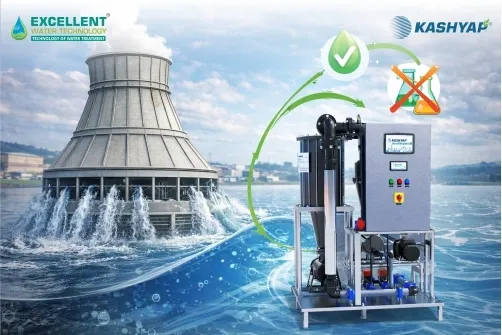
Chemical-Free Cooling Tower Blowdown Water Treatment
In industries like manufacturing, power generation, and HVAC across India, cooling tower blowdown water treatment becomes a major concern due to excessive water waste and chemical buildup.
Think about it, evaporative cooling leaves behind concentrated minerals that force frequent blowdowns, increasing operational costs and environmental stress. But what if you could recover most of that water without using harsh chemicals? That is true by using innovative chemical-free cooling water treatment that boosts cooling tower blowdown water recovery, cuts waste by up to 80%, and promotes sustainability. This approach not only saves water but also aligns with India's push for efficient resource use, helping businesses reduce bills while meeting sustainability regulations.
Key Takeaways
✔ Sustainability = profitability. Effective cooling tower blowdown management reduces water procurement costs and discharge penalties simultaneously.
✔ The Kashyap Auto-BFSR offers a chemical-free cooling water treatment path, removing the "hidden costs" of traditional inhibitors.
✔ Implementing cooling tower blowdown water reuse is the fastest way to comply with evolving ZLD (Zero Liquid Discharge) mandates in India.
Understanding Cooling Tower Blowdown
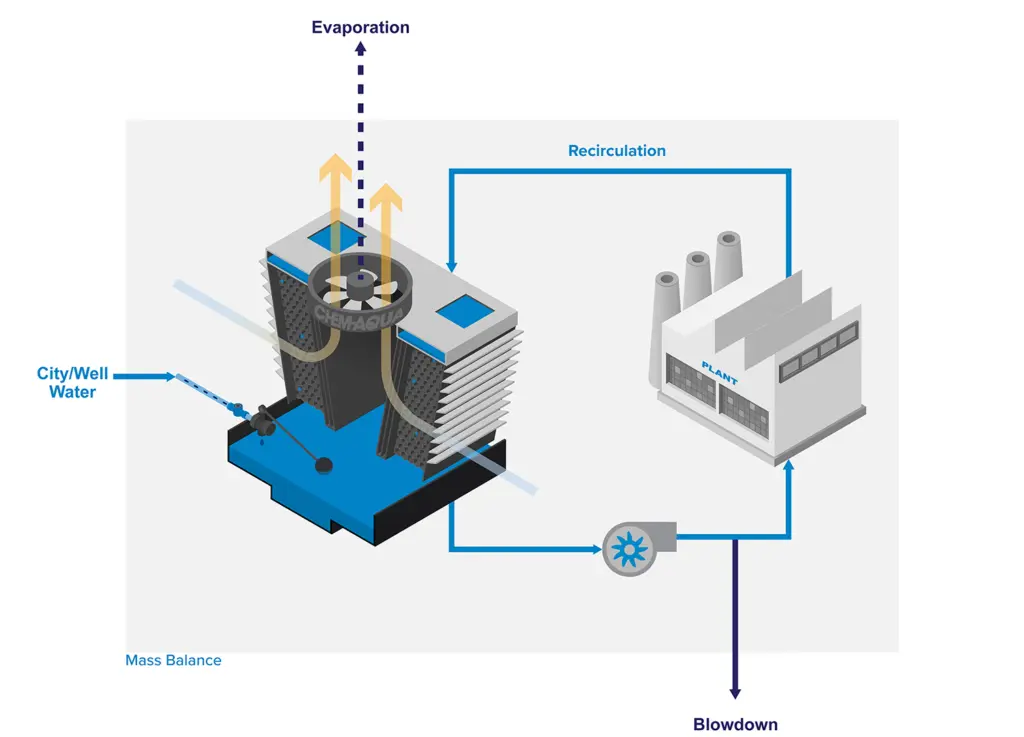
Cooling tower blowdown is the intentional discharge of water to prevent mineral buildup from evaporation. Why does it matter? As water evaporates, dissolved solids like calcium and silica concentrate, risking scale, corrosion, and bacterial growth if left unchecked.
The process ties into cycles of concentration (COC) - the ratio of solids in circulating water to makeup water. A typical COC of 4-6 means 7-10% of water is blown down. Higher COC reduces blowdown and demands better treatment to avoid issues.
Blowdown rate is calculated as: Blowdown = Evaporation / (COC - 1). For example, if evaporation is 100 gallons and COC is 5, blowdown is 25 gallons. This keeps systems efficient but generates waste needing management.
Problems Associated with Blowdown Water
Untreated blowdown water causes scaling, where minerals like calcium deposit on surfaces, reducing heat transfer by up to 30% and increasing energy use.
Environmental Impact: High concentrations of phosphorus and heavy metals can lead to heavy fines from local pollution control boards.
Thermal Inefficiency: If you don't calculate cooling tower efficiency correctly, scaling acts as an insulator, forcing your chillers to work 20% harder for the same output.
Health Risks: Stagnant, mineral-rich water is a breeding ground for pathogens. You must control and prevent Legionella growth to ensure site safety.
Kashyap Insight: Most facilities see blowdown as a waste stream. We see it as a 'pre-treated' source of water that has already been filtered once; it just needs the right technology to be reborn.
Environmentally, blowdown pollutes with chemicals and salts, straining India's rivers. A TERIstudy notes that industrial water waste contributes to 30% reductions in freshwater via mandates like zero liquid discharge (ZLD).
See how Kashyap’s cooling tower blowdown reduction technology can cut your makeup water costs
Benefits of Effective Cooling Tower Blowdown Management
A. Drastic Reduction in Makeup Water Costs
The most visible drain on an industrial budget is the constant intake of fresh water. When you effectively manage blowdown, you are essentially increasing your Cycles of Concentration (CoC).
Increasing your CoC from 3 to 6 can reduce your blowdown volume by 50%. This directly lowers the volume of expensive "makeup water" required to keep the system balanced. By implementing cooling tower blowdown reduction technology, you stop paying for water twice, once to buy it and once to discharge it.
B. No Dependency on Chemicals
Traditional blowdown management relies heavily on phosphonates, polymers, and oxidizing biocides to keep the water "behaving." This creates a toxic cycle: you add chemicals to prevent scale, which then makes the blowdown water too hazardous to reuse without expensive post-treatment.
Our chemical-free cooling water treatment (Kashyap Auto-BFSR) uses electrolytic scale precipitation. Instead of adding a liquid chemical to "hide" the minerals, we physically remove the hardness from the water. Your blowdown water remains chemically "clean," making cooling tower blowdown water reuse for secondary industrial processes.
C. Thermal Integrity and Asset Longevity
Scale is an insulator. A mere 0.1mm of scale buildup on your heat exchanger tubes can decrease heat transfer efficiency by nearly 10%. This forces your chillers to consume more electricity to achieve the same cooling effect.
Precise cooling tower blowdown water treatment ensures that the Langelier Saturation Index (LSI) remains balanced. You calculate cooling tower efficiency and see it trending upward, while simultaneously extending the life of your expensive condenser tubes by preventing "under-deposit" pitting corrosion, scale, and bacteria growth.
D. Bacterial Growth Control
Blowdown is not just about minerals; it's about microbiology. Stagnant or poorly managed blowdown creates the perfect environment for harmful pathogens. To control and prevent Legionella growth, you need a system that doesn't just "poison" the bacteria but removes the organic "biofilm" they hide in.
The electrolytic process in our Kashayp Auto-BFSR naturally generates in-situ oxidants that provide a persistent disinfecting effect without the "corrosiveness" of bulk-added chlorine.
Challenges in Cooling Tower Blowdown Treatment
The Scaling and Mineral Saturation
The primary barrier to effective cooling tower blowdown management is the concentration of dissolved solids. As water evaporates, minerals like Calcium, Magnesium, and Silica reach their saturation limit. At this raise in scaling, even a minor fluctuation in temperature or pH causes these minerals to crash out of the solution instantly.
This is a systemic risk. If your cooling tower blowdown reduction technology isn't designed to handle these specific precipitation triggers, you’ll find your recovery membranes fouled and useless within weeks.
The Hidden Cost of the "Conductivity Loop"
Most facilities fall into the trap of the conductivity loop. To manage hardness, they add salt (via softeners) or acids. While this might stop scale in the short term, it skyrockets the Total Dissolved Solids (TDS) and conductivity of the water. High conductivity acts as a trigger for electrochemical corrosion, eating away at your carbon steel pipes from the inside out. This makes cooling tower blowdown water reuse nearly impossible for sensitive secondary processes because the water remains "chemically heavy" and aggressive toward metal surfaces.
The Biofilm Breeding Ground
In the warm environment of a cooling tower, bacteria build "cities" called biofilms. This sticky slime acts as a physical shield, protecting pathogens like Legionella from standard chlorine dosing.
To effectively control and prevent Legionella growth, you can’t just throw more chemicals at it; you need a way to disrupt the biological attachment. Without this, your blowdown water remains a biological liability, regardless of how "clear" it looks to the naked eye.
Operational Volatility
Unlike a steady tap water source, blowdown quality is a moving target. It shifts based on the weather, the production load, and even the quality of the makeup water source.
A traditional treatment plan that relies on manual dosing or fixed-rate filtration will inevitably fail because it cannot adapt to these shifts. This is why facilities end up dumping more water than necessary. They use excessive blowdown as a safe option because their treatment technology is not responsive enough to handle the actual thermal stress of the process.
Struggling with frequent blowdown issues or chemical costs? Let’s look at how the Kashyap Auto-BFSR works with these challenges.
Why Are Existing Technologies Not Good Enough?
✔ Traditional chemical treatments control scale but generate hazardous waste, failing ZLD compliance, and adding 100% to costs.
✔ RO and NF recover 60-85% but struggle with silica, needing pretreatment and consuming energy (2-3 kWh/m³).
✔ EC and ED remove ions effectively (up to 99%) but demand high power (0.18-3 kWh/m³) and maintenance.
✔ They often fall short on biofouling, requiring combos that complicate operations.
In India, these don't address water blowdown fully because water remains 10-20% wasted, per TERI benchmarks.
Struggling with inefficient blowdown?
Kashyap Auto-BFSR: Chemical-Free Cooling Tower Blowdown Water Treatment
Kashyap Auto-BFSR is an electrolysis-driven system that prevents biofouling and removes scale without chemicals.
How it works?
Electrolysis sanitizes water, deposits scale in a chamber for auto-removal, and inhibits corrosion.
The electrolytic reaction naturally generates oxidants (like hydroxyl radicals and ozone) directly from the water molecules. This provides a continuous, chemical-free cooling water treatment that destroys the biofilm. It is the most reliable way to control and prevent Legionella growth without adding corrosive chlorine gas or liquids.
What are its benefits?
Also, it is 100% chemical free technology. It also comes with zero maintenance and saves 80% of water in the cooling tower via higher COC.
It enables cooling tower blowdown water reuse by producing clean permeate, cutting makeup needs.
In practice, it boosts efficiency by 15-20%, saves energy, and aligns with eco-goals.
It also reduces water blowdown by 85%, generating measurable savings in water (m³) and CO2 (tonnes).
Save energy costs and eliminate chemical dependency with Kashyap's AUTO BFSR technology.
FAQs
1. What is a cooling tower blowdown and why is it necessary?
Cooling tower blowdown discharges concentrated water to prevent scaling and corrosion from evaporation buildup, essential for system efficiency.
2. How can cooling tower blowdown water be reused?
Through cooling tower blowdown water recovery, like electrolysis, treating it for makeup reuse, cutting fresh water needs by 60-80%.
4. What problems does untreated blowdown water cause?
It leads to scaling, corrosion, biofouling, high energy use, and environmental pollution, impacting costs and compliance.
Conclusion
By now, you've understood how cooling tower blowdown water treatment converts a common industrial headache into a smart, sustainable win if approached correctly.
Chemical-free innovations like Kashyap's Auto-BFSRcut blowdown volumes by up to 80%, reclaiming water for reuse while saving energy and cutting costs all without harsh additives. It's the key to efficient, eco-friendly operations for India's water-challenged sectors, where every drop counts toward a greener future.
About the author
Vivek Donga is the CEO & Technical Director at Kashyap, a leading water solution company that provides solutions for hard water treatment. With 9+ years of experience in addressing hard water challenges and keeping the customer-centric approach, he is dedicated in delivering eco-friendly and efficient solutions for commercial and industrial applications.