January 22, 2026
11 min

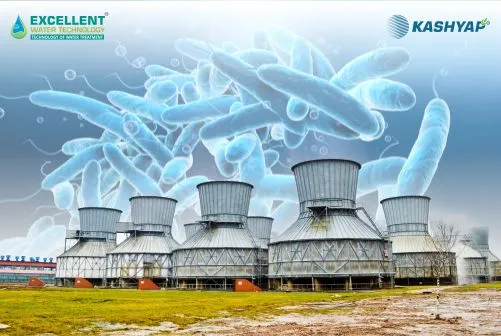
Legionella prevention in cooling towers is a safety mandate.
Research shows 60-80% of all cooling towers already harbor this bacteria. When systems turn these dormant colonies into airborne threats through drift and mist, people breathe contaminated water droplets.
The 2017 Disneyland outbreak proved this. Two contaminated towers infected 22 visitors, hospitalized 10, and caused one death, all because elevated bacterial levels went unnoticed until people started showing pneumonia symptoms. Your industrial cooling system could be suffering from the same situation threat right now.
✔ Legionella in cooling towers is a dual threat: a severe public health risk and a sign of inefficient, failing operations.
✔ A non-chemical cooling water treatment, like Kashyap Auto BFSR, stops the biofilm and scale that Legionella needs to grow.
✔ Proactive habitat removal beats reactive chemical dosing. It's safer, more sustainable, and more cost-effective long-term.
✔ True ROI comes from risk avoidance + efficiency. Preventing an outbreak protects your brand, while a clean system cuts energy costs by 15-30%.
Legionella is a waterborne bacterium that thrives in warm, stagnant water systems like cooling towers. When inhaled via contaminated aerosol, it causes Legionnaires' disease, a severe pneumonia. Effective Legionella prevention in cooling towers is non-negotiable for industrial safety.
Among all species, Legionella pneumophila serogroup 1 causes approximately 90% of disease cases. Industrial facilities operating cooling towers create perfect amplification sites because these systems continuously recirculate warm water while generating aerosols that can spread bacteria across distances up to 1.5 kilometers from the source.
One Chinese surveillance study found 35.7% of industrial cooling tower samples tested positive, with bacterial concentrations ranging from 100 to 88,000 CFU/liter.
How is the Spread of Legionella Bacteria Related to Cooling Towers?
Legionella bacteria love to grow in water that is at just the right temperature between 20 and 45 degrees Celsius. Anything above or below this temperature range won’t cause the bacteria to multiply.
Temperatures between 20 and 45 degrees Celsius are ideal for Legionella growth.
Since a cooling tower deals with changing temperatures, there is an increased risk of the bacteria taking hold if not treated properly.
More information :
Studies from New York's cooling tower surveillance program show less than 30% of registered towers test positive when properly maintained, yet most worldwide Legionnaires' disease outbreaks trace back to poorly managed cooling systems. The recirculating nature of tower water provides extended retention time that allows bacterial populations to build from harmless background levels - below 10 CFU/mL - to outbreak-associated concentrations exceeding 1,000 CFU/mL.
Vancouver's 2021 surveillance found approximately 1-in-20 cooling towers reported bacterial levels at or above 10 CFU/mL, the threshold requiring immediate Legionella control measures.
Legionella in cooling towers poses dual threats: immediate health crisis and long-term operational failure.
Health Risks: Legionella can cause Legionnaires’ disease, a severe form of pneumonia that can be fatal if not treated promptly. The disease can cause fever, cough, shortness of breath, and muscle aches.
Operational Risk: Beyond health, Legionella growth signifies a system in distress. Biofilm and scale, which harbour bacteria, dramatically reduce heat transfer efficiency.
This forces your system to work harder, spiking energy costs and accelerating corrosion, leading to costly repairs and downtime. Neglecting Legionella control measures results in legal consequences, regulatory fines, and damage to your brand reputation.
California OSHA fined Disneyland $33,000 for failing to follow proper cooling tower Legionella control protocols, and that's just the citation amount before considering litigation costs from infected individuals.
Get in touch with us today to prevent Legionella growth and improve your cooling tower's efficiency..
Temperature zones between 77-113°F (25-45°C): This provides ideal breeding conditions. Most industrial cooling operations run squarely in this danger zone, giving bacteria maximum reproduction rates.
Stagnant water: Low-flow or shutdown periods allow temperatures to enter the danger zone and disinfectant to dissipate.
Scale & corrosion deposits: These provide nutrients and shield bacteria from biocides.
Biofilm formation: This slimy layer on internal surfaces is Legionella's fortress, offering protection that makes standard water treatment for Legionella significantly less effective.
Insufficient disinfectant residuals: They leave water unprotected. Systems relying on periodic shock treatments rather than continuous monitoring allow bacterial populations to rebound between applications.
A facility might spend thousands on emergency decontamination, restart the system, and face the same contamination problem within a month. Breaking this cycle requires addressing root causes, not just treating symptoms.
✔ Biofilm appears as visible slime that is brown, green, or black coatings on fill media, basin walls, and distribution nozzles.
✔ Operational parameters shift signal changing conditions inside the system.
✔ Reduced heat transfer efficiency appears as decreased delta-T across the tower or rising condenser approach temperatures.\
✔ Water quality testing anomalies provide the most direct warning.
✔ Excessive drift or visible mist leaving the tower suggests drift eliminator failure or design problems.
✔ An unexplained spike in energy consumption, this is a sign of reduced cooling tower efficiency due to fouling.
Addressing these common cooling tower problems is your first line of defence in Legionella prevention in cooling towers.
✔ Regular maintenance: Clean and disinfect the cooling tower regularly to remove any bacteria or biofilm buildup.
✔ Temperature control: Ensure that water temperature stays below 50°C to prevent Legionella growth.
✔ Water treatment: Use chemical and non-chemical methods to treat water, but be mindful of excessive use of biocides, which can lead to resistance.
Kashyap Auto BFSR Technology: Our Auto Biofouling Scale Removal (AUTO BFSR) system offers a chemical-free cooling water treatment to remove scale and biofouling, preventing Legionella growth naturally. This system helps maintain clean, circulating water, reducing the conditions that promote bacterial growth.
Kashyap's Auto-BFSR system runs on an electrolysis technology and it begins by pumping water from the cooling tower into the electrolytic chamber. Also, this technology utilizes electrochemical reactions to remove scale formation and biofouling and other bacteria in cooling towers while improving water quality and operational efficiency.
Our Auto-BFSR works with your existing cooling tower systems with minimal modifications, delivering immediate protection while you continue operations.
Prevent biofouling, remove scale, bacteria like Legionella, and produce natural oxidants all without a single chemical. Discover our technology↗
The calculus is clear :
Cost of Neglect: An outbreak incurs crippling costs: human tragedy, regulatory fines, litigation, reputational devastation, and operational shutdown.
A 2019 study in the Journal of Public Health Management & Practice estimated the minimum economic burden of a single Legionnaires' case at over $38,000, excluding intangible brand damage.
Investment in Prevention: This includes technologies like Kashyap Auto BFSR, solid monitoring, and expert auditing. The ROI is guaranteed, which eliminates chemical costs, calculates cooling tower efficiency gains (often 15-30% energy savings), extends asset life, and, most importantly, provides the priceless assurance of safety and compliance.
A layered defence is key. Use non-chemical technology like Kashyap Auto BFSR as your foundational prevention, and layer it with these essential practices:
Regular, documented inspection & testing: Weekly visual checks, monthly water quality tests, and quarterly Legionella culture tests.
Maintain cleanliness: Schedule regular mechanical cleaning and disinfection, especially after shutdowns.
Optimize system operation: Ensure proper bleed-off and filtration to control concentration cycles and particulate. (Explore water-saving tips for efficient cooling towers to do this sustainably).
Keep a legally defensible record: Document every action, test result, and corrective measure.
1. How to treat water in cooling towers to prevent Legionella?
Use a combination of regular cleaning, temperature control, and Auto BFSR technology to keep water safe from Legionella contamination.
2. How to maintain a Legionella-free cooling tower system?
Implement a comprehensive water treatment plan, regularly monitor water quality, and use effective anti-biofouling systems like Auto BFSR.
3. How to reduce Legionella risk in cooling tower water systems?
Maintain proper water circulation, use appropriate chemical treatments, and regularly clean and disinfect the system to minimize Legionella risks.
4. What are the most common Legionella risk factors in cooling towers?
Stagnant water, biofilm buildup, and improper maintenance are the top risk factors for Legionella in cooling towers.
5. Signs of Legionella contamination in cooling towers?
Look for increased water temperature, biofilm buildup, and a decrease in cooling efficiency.
Legionella control measure is the one that stop the problem before it starts. It’s about choosing a foundation of prevention over a cycle of chemical reaction. Your decision today defines your risk profile tomorrow.
Excellent Water Technology for over two decades has redefined what’s possible in non-chemical water treatment for cooling towers across different industries.

Get a Quote
Are you interested in our solutions?
Please feel free to contact me directly

Vivek Donga
CEO & Director (Technical)
Response within 24 hours
Mon-Fri 9:00 - 17:00