Importance of Cooling Towers in Power Plants and How to Maintain Their Efficiency

Vivek Donga

February 10, 2026

12 min

Table of Contents

Introduction

Reliability is the currency in the power sector.

You can have the most advanced combustion technology available, but if your heat rejection system fails, your entire output is restrained. Power plant cooling towers are frequently treated as "set and forget" utilities, but this neglect leads to a slow, silent decline in Delta T.

When cooling towers in power plants can't reject heat effectively, the impact goes through every system downstream. Condenser backpressure rises, turbines work harder, fuel consumption increases, and margins evaporate. Yet most operations teams only notice when the damage is already done.

Certainly, the plants winning this battle are not using more chemicals or running more maintenance cycles; they'reoptimizing the efficiency of cooling towers at the right time by rethinking the problem entirely. Let's see how!

Key Takeaways

When a power plant’s Delta T starts to shrink, so does its profit margin.

You can have the most advanced turbine in the world, but if your power plant cooling towers are struggling with scale, your heat rate will suffer.

In any thermal cycle, the "cold end" determines the "hot end's" success.

Most see the white plumes and think "exhaust." We see a critical heat exchange process. Power plant cooling towers are fundamental to maintaining the vacuum in your condenser.

Every degree of cold water returns matters. In the high-stakes world of energy production, power plant cooling towers are your primary defence against thermal inefficiency.

What Are Cooling Towers and Why Do Power Plants Need Them?

Cooling towers are specialized heat exchangers that reject waste heat from the condenser into the atmosphere through evaporation. Power plants need them because steam must be condensed back into water to complete the Rankine cycle; the cooler the water, the higher the plant’s overall thermodynamic efficiency and power output.

Power plants need them to maintain a low-pressure vacuum at the turbine exhaust; by cooling the circulating water, the tower allows steam to condense back into liquid, completing the Rankine cycle and maximizing the mechanical work extracted from the fuel.

In a thermal power plant, the "work" is done by the pressure drop across the turbine. If you cannot condense the steam coming out of the turbine, backpressure builds up, and the turbine loses its ability to spin efficiently.

You need cooling towers for three reasons:

1. Maintaining the Vacuum: The lower the temperature of the cooling water returning from the tower, the "deeper" the vacuum in your condenser. A better vacuum means the turbine can extract more energy from every pound of steam.

2. Water Recirculation (The Closed Loop): In most regions, drawing massive amounts of water from a river and dumping it back "hot" is environmentally illegal and logistically impossible. The cooling tower allows you to reuse the same water over and over, losing only a small fraction to evaporation.

3. Thermal Equilibrium: Without a cooling tower, the heat gained in the boiler has nowhere to go but to stay in the system. The tower is the "exhaust valve" for the thermal energy that physics won't allow you to turn into electricity.

How Do Cooling Towers Work in Power Plants?

The Heat Exchange: Hot water from the condenser is sprayed over "fill" material.

🡻

The Surface Area: The fill breaks the water into thin films or tiny droplets to maximize air contact.

🡻

Evaporative Cooling: As air passes through (either by natural draft or fans), a small portion of water evaporates, stripping away the latent heat.

🡻

The Result: The remaining water drops by 10 to 15 degrees and is pumped back to the condenser.

Why Cooling Tower Efficiency Declines in Power Plants

If you've ever wondered why a cooling tower that worked perfectly at commissioning struggles to maintain approach temperature a few years later, the answer lies in four interconnected failure modes that brilliantly highlight the importance of cooling towers in power plants.

Each one compounds the others, creating a downward spiral in heat rejection capability.

1. Mineral Scaling

As water evaporates in your cooling tower, dissolved minerals concentrate. When these minerals reach saturation, they precipitate onto surfaces - condenser tubes, heat exchanger plates, and cooling tower fill.

Scale deposits as thin as 0.5 mm on heat exchanger surfaces can reduce heat transfer efficiency by 10-15%. In condenser tubes where you're trying to reject megawatts of thermal energy, this leads directly to elevated water temperatures and increased backpressure.

A study on the Kamojang Geothermal Power Plant in Indonesia documented sulfate levels rising from 224 ppm to critical levels, directly correlating with declining cooling tower efficiency and increased power generation losses.

2. Biofouling

Cooling towers create perfect conditions for biological growth: warm water, sunlight, oxygen, and nutrients. Within days of startup, planktonic bacteria colonize your system. Within weeks, they form biofilms, structured communities of microorganisms encased in a protective slime layer.

To get power plant cooling tower efficiency, it becomes mandatory to spend millions annually on biocides - chlorine, bromine compounds, and non-oxidizing treatments, just to control microbiological activity.

The challenge is that planktonic bacteria (free-floating) are easy to kill with oxidizing biocides, but established biofilms are remarkably resistant. The protective slime layer can reduce biocide penetration by 90% or more.

3. Fouling

Beyond biological growth and mineral scaling, cooling towers accumulate suspended particles: silt, mud, organic matter, and airborne debris. Open recirculating systems are particularly vulnerable; they're essentially large air washers pulling in everything the atmosphere contains.

4. Corrosion

While the other three mechanisms reduce efficiency, corrosion destroys equipment. Cooling systems present a perfect storm of corrosive conditions.

The Electric Power Research Institute (EPRI) analysis found that corrosion products don't just damage equipment; they lodge in other locations, creating secondary fouling problems.

It's a failure cascade: corrosion releases particles → particles deposit downstream → deposits create crevices → crevices accelerate corrosion.

Why Traditional Treatment Falls Short?

These four mechanisms don't operate independently. Biofilm provides anchoring sites for scale. Scale creates crevices for corrosion. Corrosion products contribute to fouling. Fouling reduces flow velocities, which changes chemistry and exacerbates scaling while leaving harmful effects of chemicals.

This is the operational reality that forces the question: Is there a fundamentally different approach that addresses root causes rather than managing symptoms?

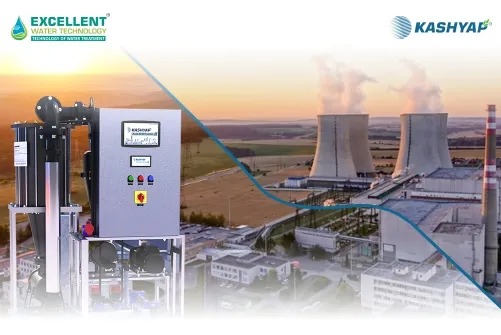
Optimize the Cooling Tower Efficiency


Why Cooling Towers Are Critical for Power Plant Efficiency?

In a power plant, efficiency is dictated by the Rankine Cycle. The cooling tower governs the "Cold Sink" temperature. If the cooling tower is inefficient, the condenser temperature rises. When the condenser temperature rises, the turbine backpressure increases.

The result? The turbine has to "push" harder to exhaust steam, consuming more internal energy and leaving less for the grid.

Here is how that technical reality summarizes into plant performance:

Factor Impact on the plant So what?
Condenser vacuumLower CW temperature improves the vacuum.Higher turbine output for the same fuel.
Fuel consumption Efficient cooling reduces the heat rate.Significant reduction in coal/gas costs.
Equipment lifePrevents thermal stress on the condenser.Reduced CAPEX on early replacements.

How Do Cooling Towers Support Thermal Power Plant Operations?

1. Managing the "Condenser Vacuum" Integrity

The most critical support function is the maintenance of the condenser vacuum. In a thermal cycle, steam must be converted back to water almost instantaneously to create a low-pressure zone.

The cooling tower supports this by providing a consistent, high-volume flow of "Cold Water." If the tower fails to dissipate heat, the vacuum "decays." A decaying vacuum is a nightmare for operators; it triggers alarms, vibrates the turbine, and eventually leads to a mandatory plant trip to prevent catastrophic equipment failure.

2. Providing an "Environmental Buffer"

Power plants do not operate in a vacuum; they operate in changing climates. Whether it is a 45 °C summer day or a humid monsoon evening, the plant’s internal machinery needs a stable environment.

The cooling tower acts as the "thermal sink" that absorbs these external shocks. By optimizing air-to-water ratios through fans and fill design, the tower ensures that the "Hot End" of the plant (the boiler and turbine) never feels the brunt of the external weather fluctuations.

3. Enabling Closed-Loop Sustainability

From a regulatory and operational standpoint, the cooling tower supports the plant’s "License to Operate". In modern thermal plants, taking massive amounts of water from local sources for "once-through" cooling is no longer viable due to thermal pollution laws.

The cooling tower supports operations by enabling a closed-loop system. It allows the plant to recirculate over 95% of its cooling water, minimizing the "make-up water" requirement and ensuring the plant remains compliant with environmental water-discharge permits.

4. Protecting the CAPEX (Equipment Longevity)

Heat is a silent killer of mechanical components. By maintaining the circulating water within a specific temperature range, the cooling tower prevents thermal expansion stresses in the condenser tubes and piping.

When a tower is working at peak efficiency, it reduces the "Thermal Fatigue" on the secondary systems, effectively extending the lifespan of your most expensive capital assets.

Upgrade your power plant operations with automated, chemical-free solutions today

How Kashyap Auto BFSR Addresses Scale and Biofouling in Power Plant Cooling Towers

Cooling towers commonly face two persistent issues: the evaporation of water that concentrates minerals, leading to scale buildup, and warm water that fosters microbial growth, resulting in biofouling. For decades, the solution has involved adding more chemicals, which raises costs and comes with dangerous handling risks.

Kashyap Auto-BFSR system takes a revolutionary approach by directly tackling these challenges using physics.

This scale and bio removal system continuously fights against both scale and biofouling, including the control and prevention of Legionella growth, ensuring a cleaner, more efficient system.

Let us calculate cooling tower efficiency and discuss how Kashyap Auto-BFSR can improve your tower's Delta T and efficiency today!

FAQs

Q1. What’s the typical lifespan of a power plant cooling tower?

While the structure can last 20-30 years, the efficiency lifespan of the internal fill is often only 5-7 years if scaling is left unchecked. With Kashyap’s BFSR technology, we aim to extend that peak efficiency window significantly.

Q2. What maintenance is required for optimal cooling tower performance?

Beyond mechanical checks on fans/pumps, the priority is water chemistry. Continuous monitoring of TDS, pH, and microbial growth is non-negotiable for a healthy tower.

About the author

Vivek Donga

Vivek Donga is the CEO & Technical Director at Kashyap, a leading water solution company that provides solutions for hard water treatment. With 9+ years of experience in addressing hard water challenges and keeping the customer-centric approach, he is dedicated in delivering eco-friendly and efficient solutions for commercial and industrial applications.

Vivek Donga

CEO & Technical Director

Contact our specialists now
Head Image

Get a Quote

Are you interested in our solutions?

India flag

(+91)

Please feel free to contact me directly

Image of head

Vivek Donga

CEO & Director (Technical)

info@ewt-kashyap.com
+91 97254 40807